 上海医学院公共技术平台
 问答咨询
问答咨询校外用户付费方法
平台测试收费管理方法和流程
平台致谢奖励
Q: 注册了为什么还不能预约
Q:课题组如何设定?
Q:校外用户如何注册?
 系统公告
系统公告【仪器培训】上海医学院公共技术平台202...
【仪器免费试用】SmartOrgan D...
【仪器讲座+免费试用】超灵敏单分子荧光技...
【仪器培训】BioAFM 生物力学检测技...
【仪器培训】ARIETTA 750 弹性...
【仪器demo】HCS.ai智能高内涵分...
技术团队
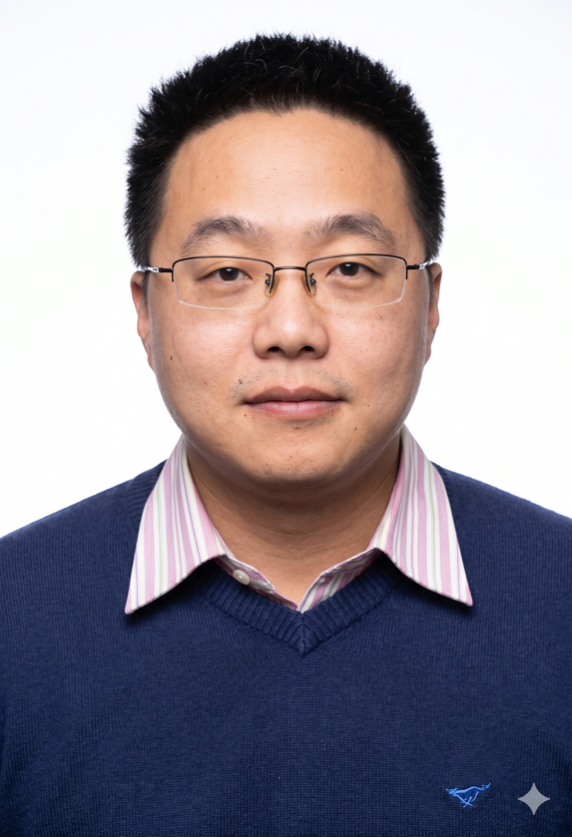
管理的仪器名称:
服务器
开展的服务:
1) 生信数据分析
2) 生物软件开发
可服务的新技术新方法:
1) 多组学数据分析
2) 蛋白三维结构预测
3) 分子对接:小分子、蛋白、多肽
案例:
1) GRIP:国内首个开发糖肽谱图解析的自动化软件,2007年已发表。GRIP是国际上首次在人类组织中实现高通量糖肽鉴定的技术方法,可获得糖链结构、肽段序列和修饰位点等糖肽全部信息。GRIP是pGlyco的前生,本人参与并指导pGlyco的开发过程。pGlyco系列已发表多篇Nature子刊。糖肽软件开发的领域,本人也获得国自然青年和国自然面上的资助。
2) oppStudio:自主开发针对各种组学数据分析的系列软件包,其中三个模块oppHeatmap、opp-lncRNA和oppOntology均已发表SCI论文。oppBiomarker为各课题组服务中多次使用。
代表论文:
1) Yiming Zhong, Guangming Wang, Shangzhi Yang, Yang Zhang#, Xianli Wang#. The role of DNA damage in neural stem cells ageing. Journal of Cellular Physiology, 2024.
2) Ze-ning Wang, Jun Yao, Hang Liu, Yang Liu, Hong Jin#, Yang Zhang#. oppHeatmap: Rendering Various Types of Heatmaps for Omics Data. Applied Biochemistry and Biotechnology, 2023.
3) Jun Yao, Ze-Ning Wang, Hang Liu, Hong Jin#, Yang Zhang#. Survey of Acetylation for Thermoanaerobacter tengcongensis. Applied Biochemistry and Biotechnology, 2023.
4) Sheng-Yang Ge, Ze-Ning Wang, Chuan-Yu Sun, Yi-Fan Tan, Hong Jin#, Yang Zhang#. oppOntology: a MATLAB Toolbox for Enrichment Analysis. Applied Biochemistry and Biotechnology, 2022.
5) Sheng-Yang Ge, Yi-Fan Tan, Ze-Ning Wang, Chuan-Yu Sun, Yang Zhang#. opplncRNA: A MATLAB Package for Comprehensive Pathway Analysis of lncRNA-miRNA-mRNA in Humans. Applied Biochemistry and Biotechnology, 2022.
6) Weimin Zheng, Pengyuan Yang, Chuanyu Sun, Yang Zhang#. Comprehensive comparison of sample preparation workflows for proteomics. Molecular Omics, 2022.
7) Diyu Lv, Ying Zhang, Chunmei Wang, Yi Gu, Yang Zhang#, Xiuhua Li#. Platelets Derived Transthyretin Participate In The Development of Sepsis Associated Acute Kidney Injury by Inducing Oxidative Stress and Apoptosis of Renal Tubular Epithelial Cells. Shock, 2022.
8) Yajun Hu, Jun Yao, Zening Wang, Hui Liang, Cunyu Li, Xinwen Zhou, Fengying Yang, Yang Zhang#, Hong Jin#. Comparative Proteomic Analysis of Drug Trichosanthin Addition to BeWo Cell Line. Molecules, 2022. 27(5).
9) Weimin Zheng, Yang Zhang, Chuanyu Sun, Shengyang Ge, Yifan Tan, Huali Shen, Pengyuan Yang. A Multi-Omics Study of Human Testis and Epididymis. Molecules, 2021. 26(11).
10) Minzhe Yu, Yushuai Duan, Zhong Li, Yang Zhang. Prediction of Peptide Detectability Based on CapsNet and Convolutional Block Attention Module. International Journal of Molecular Sciences, 2021. 22(21).
11) Jing Wang, Xiaoqing Li, Zheng Liu, Xinyi Lin, Fan Zhong, Shuhao Li, Xinru Tang, Yang Zhang, Liliang Li. Second-generation antipsychotics induce cardiotoxicity by disrupting spliceosome signaling: Implications from proteomic and transcriptomic analyses. Pharmacological Research, 2021. 170: p. 105714.
12) Yifan Tan, Min Wang, Yang Zhang, Shengyang Ge, Fan Zhong, Guowei Xia, Chuanyu Sun. Tumor-Associated Macrophages: A Potential Target for Cancer Therapy. Frontiers in Oncology, 2021. 11: p. 693517.
13) Chuan-Yu Sun, Yuan-Yuan Mi, Sheng-Yang Ge, Qing-Feng Hu, Ke Xu, Yi-Jun Guo, Yi-Fan Tan, Yang Zhang#, Fan Zhong#, Guo-Wei Xia#. Tumor- and Osteoblast-Derived Periostin in Prostate Cancer bone Metastases. Frontiers in Oncology, 2021. 11: p. 795712.
14) Jialin Liu, Yi Hao, Yanwen He, Xiang Li, De-En Sun, Yang Zhang, Peng-Yuan Yang, Xing Chen. Quantitative and Site-Specific Chemoproteomic Profiling of Protein O-GlcNAcylation in the Cell Cycle. ACS Chemical Biology, 2021. 16(10): p. 1917-1923.
15) Yan Jiang, Chan Xiang, Fan Zhong, Yang Zhang, Liyan Wang, Yuanyuan Zhao, Jiucun Wang, Chen Ding, Li Jin, Fuchu He, Haijian Wang. Histone H3K27 methyltransferase EZH2 and demethylase JMJD3 regulate hepatic stellate cells activation and liver fibrosis. Theranostics, 2021. 11(1): p. 361-378.
16) Huang, J., M. Wu, Y. Zhang, S. Kong, M. Liu, B. Jiang, P. Yang, and W. Cao#, OGP: A Repository of Experimentally Characterized O-Glycoproteins to Facilitate Studies on O-Glycosylation. Genomics Proteomics Bioinformatics, 2021.
17) Ge, S., Y. Mi, X. Zhao, Q. Hu, Y. Guo, F. Zhong, Y. Zhang, G. Xia, and C. Sun, Characterization and validation of long noncoding RNAs as new candidates in prostate cancer. Cancer Cell International, 2020. 20(1): p. 531.
18) Zhou, J., Z. Wang, Y. Mao, L. Wang, T. Xiao, Y. Hu, Y. Zhang, and Y. Ma#, Proteogenomic analysis of pitaya reveals cold stress-related molecular signature. PeerJ, 2020. 8: p. e8540.
19) Fang, P., J. Xie, S. Sang, L. Zhang, M. Liu, L. Yang, Y. Xu, G. Yan, J. Yao, X. Gao, W. Qian, Z. Wang, Y. Zhang#, P. Yang#, and H. Shen#, Multilayered N-Glycoproteome Profiling Reveals Highly Heterogeneous and Dysregulated Protein N-Glycosylation Related to Alzheimer's Disease. Analytical Chemistry, 2020. 92(1): p. 867-874.
20) Cao, W., M. Liu, S. Kong, M. Wu, Y. Zhang, and P. Yang#, Recent advances in software tools for more generic and precise intact glycopeptide analysis. Molecular Cellular Proteomics, 2020.
21) Zeng, W.F., M.Q. Liu, M.Q., W.F. Zeng, P. Fang, W.Q. Cao, C. Liu, G.Q. Yan, Y. Zhang, C. Peng, J.Q. Wu, X.J. Zhang, H.J. Tu, H. Chi, R.X. Sun, Y. Cao, M.Q. Dong, B.Y. Jiang, J.M. Huang, H.L. Shen, C.C.L. Wong#, S.M. He#, and P.Y. Yang#, pGlyco 2.0 enables precision N-glycoproteomics with comprehensive quality control and one-step mass spectrometry for intact glycopeptide identification. Nature Communicaton, 2017. 8(1): p. 438.
22) Liu*, Y. Zhang*, J.Q. Wu, P. Fang, C. Peng, A. Nie, G. Yan, W. Cao, C. Liu, H. Chi, R.X. Sun, C.C. Wong, S.M. He#, and P. Yang#, pGlyco: a pipeline for the identification of intact N-glycopeptides by using HCD- and CID-MS/MS and MS3. Scientific Report, 2016. 6: p. 25102.
23) Fang, P., X.J. Wang, Y. Xue, M.Q. Liu, W.F. Zeng, Y. Zhang, L. Zhang, X. Gao, G.Q. Yan, J. Yao, H.L. Shen, and P.Y. Yang#, In-depth mapping of the mouse brain N-glycoproteome reveals widespread N-glycosylation of diverse brain proteins. Oncotarget, 2016. 7(25): p. 38796-38809.
24) 刘杭,姚鋆,杨芃原,张扬#, 糖蛋白质组学的信息学资源和方法. 生物化学与生物物理进展, 2016, 43(9): 910~918.
25) Yin, X.*, Y. Zhang*, S. Guo, H. Jin, W. Wang, and P. Yang#, Large scale systematic proteomic quantification from non-metastatic to metastatic colorectal cancer. Scientific Report, 2015. 5: p. 12120.
26) Tu, J., Y. Chen, L. Cai, C. Xu, Y. Zhang, Y. Chen, C. Zhang, J. Zhao, J. Cheng, H. Xie, F. Zhong, and F. He#, Functional Proteomics Study Reveals SUMOylation of TFII-I is Involved in Liver Cancer Cell Proliferation. Journal of Proteome Research, 2015. 14(6): p. 2385-97.
27) Shen, H.*, F. Zhong*, Y. Zhang*, H. Yu, Y. Liu, L. Qin, F. He, Z. Tang, and P. Yang#, Transcriptome and proteome of human hepatocellular carcinoma reveal shared metastatic pathways with significant genes. Proteomics, 2015. 15(11): p. 1793-800.
28) Yu, H., H. Shen, Y. Zhang, F. Zhong, Y. Liu, L. Qin, and P. Yang#, CAV1 Promotes HCC Cell Progression and Metastasis through Wnt/beta-Catenin Pathway. PLoS One, 2014. 9(9): p. e106451.
29) Yin, X., X. Liu, Y. Zhang, G. Yan, F. Wang, H. Lu, H. Shen, and P. Yang#, Rapid and sensitive profiling and quantification of the human cell line proteome by LC-MS/MS without prefractionation. Proteomics, 2014.
30) Shen, F.*, Y. Zhang*, Y. Yao, W. Hua, H.S. Zhang, J.S. Wu, P. Zhong, and L.F. Zhou#, Proteomic analysis of cerebrospinal fluid: toward the identification of biomarkers for gliomas. Neurosurg Rev, 2014. 37(3): p. 367-80.
31) Liu, Y., W. Ying, Z. Ren, W. Gu, Y. Zhang, G. Yan, P. Yang, Y. Liu, X. Yin, C. Chang, J. Jiang, F. Fan, C. Zhang, P. Xu, Q. Wang, B. Wen, L. Lin, T. Wang, C. Du, J. Zhong, T. Wang, Q.Y. He, X. Qian, X. Lou, G. Zhang, and F. Zhong#, Chromosome-8-coded proteome of Chinese Chromosome Proteome Data set (CCPD) 2.0 with partial immunohistochemical verifications. Journal of Proteome Research, 2014. 13(1): p. 126-36.
32) Liu, M., Y. Zhang, Y. Chen, G. Yan, C. Shen, J. Cao, X. Zhou, X. Liu, L. Zhang, H. Shen, H. Lu, F. He, and P. Yang#, Efficient and accurate glycopeptide identification pipeline for high-throughput site-specific N-glycosylation analysis. Journal of Proteome Research, 2014. 13(6): p. 3121-9.
33) Jin, H.*, Y. Zhang*, L.Q. Xie, H.L. Shen, C.Y. Fang, H.J. Lu, M.X. Gao, H.Z. Fan, and P.Y. Yang#, Multiple technical routes to obtain a proteomics expression profile of French liver samples. Analytical Methods, 2014. 6(9): p. 2950-2958.
34) Jiang, Y., L. Guo, L.Q. Xie, Y.Y. Zhang, X.H. Liu, Y. Zhang, H. Zhu, P.Y. Yang, H.J. Lu, and Q.Q. Tang#, Proteome profiling of mitotic clonal expansion during 3T3-L1 adipocyte differentiation using iTRAQ-2DLC-MS/MS. Journal of Proteome Research, 2014. 13(3): p. 1307-14.
35) Chen, S.X., X.E. Xu, X.Q. Wang, S.J. Cui, L.L. Xu, Y.H. Jiang, Y. Zhang, H.B. Yan, Q. Zhang, J. Qiao, P.Y. Yang, and F. Liu#, Data from a proteomic analysis of colonic fibroblasts secretomes. Data Brief, 2014. 1: p. 19-24.
36) Zhang Y.*, G. Yan, L. Zhai, S. Xu, H. Shen, J. Yao, F. Wu, L. Xie, H. Tang, H. Yu, M. Liu, P. Yang, P. Xu, C. Zhang, L. Li, C. Chang, N. Li, S. Wu, Y. Zhu, Q. Wang, B. Wen, L. Lin, Y. Wang, G. Zheng, L. Zhou, H. Lu, S. Liu, F. He, and F. Zhong#, Proteome atlas of human chromosome 8 and its multiple 8p deficiencies in tumorigenesis of the stomach, colon, and liver. Journal of Proteome Research, 2013. 12(1): p. 81-8.
37) Zhang Y.*, C. Fang, H. Bao, H. Fan, H. Shen, and P. Yang#, Nuclear proteome profile of C57BL/6J mouse liver. Sci China Life Sci, 2013. 56(6): p. 513-23.
38) Huang Y., H. Wu, R. Xue, T. Liu, L. Dong, J. Yao, Y. Zhang, and X. Shen#, Identification of N-glycosylation in hepatocellular carcinoma patients' serum with a comparative proteomic approach. PLoS One, 2013. 8(10): p. e77161.
39) Aoki-Kinoshita, K.F., H. Sawaki, H.J. An, J.W. Cho, D. Hsu, M. Kato, S. Kawano, T. Kawasaki, K.H. Khoo, J. Kim, J.D. Kim, X. Li, T. Lutteke, S. Okuda, N.H. Packer, J.C. Paulson, R. Raman, R. Ranzinger, H. Shen, T. Shikanai, I. Yamada, P. Yang, Y. Yamaguchi, W. Ying, J.S. Yoo, Y. Zhang, and H. Narimatsu#, The Third ACGG-DB Meeting Report: Towards an international collaborative infrastructure for glycobioinformatics. Glycobiology, 2013. 23(2): p. 144-6.
40) Yu, H., J. Zhao, L. Lin, Y. Zhang, F. Zhong, Y. Liu, Y. Yu, H. Shen, M. Han, F. He, and P. Yang#, Proteomic study explores AGR2 as pro-metastatic protein in HCC. Molecular Biosystem, 2012. 8(10): p. 2710-8.
41) Yu, Y., H. Shen, H. Yu, F. Zhong, Y. Zhang, C. Zhang, J. Zhao, H. Li, J. Chen, Y. Liu, and P. Yang#, Systematic proteomic analysis of human hepotacellular carcinoma cells reveals molecular pathways and networks involved in metastasis. Molecular Biosystem, 2011. 7(6): p. 1908-16.
42) Sun, C., C. Song, Z. Ma, K. Xu, Y. Zhang, H. Jin, S. Tong, W. Ding, G. Xia, and Q. Ding#, Periostin identified as a potential biomarker of prostate cancer by iTRAQ-proteomics analysis of prostate biopsy. Proteome Science, 2011. 9: p. 22.
43) Nie, A.Y., L. Zhang, G.Q. Yan, J. Yao, Y. Zhang, H.J. Lu, P.Y. Yang, and F.C. He#, In vivo termini amino acid labeling for quantitative proteomics. Analytical Chemistry, 2011. 83(15): p. 6026-33.
44) Long, X., J. Zhang, Y. Zhang, J. Yao, Z. Cai, and P. Yang#, Nano-LC-MS/MS based proteomics of hepatocellular carcinoma cells compared to Chang liver cells and tanshinone IIA induction. Molecular Biosystem, 2011. 7(5): p. 1728-41.
45) Li, C., Y. Sun, Z. Fang, X. Han, R. Fang, Y. Zhang, Y. Pan, W. Zhang, Y. Ren, H. Ji, and H. Chen#, Comprehensive analysis of epidermal growth factor receptor gene status in lung adenocarcinoma. J Thorac Oncol, 2011. 6(6): p. 1016-21.
46) Jin, G.Z., Y. Li, W.M. Cong, H. Yu, H. Dong, H. Shu, X.H. Liu, G.Q. Yan, L. Zhang, Y. Zhang, X.N. Kang, K. Guo, Z.D. Wang, P.Y. Yang, and Y.K. Liu#, iTRAQ-2DLC-ESI-MS/MS based identification of a new set of immunohistochemical biomarkers for classification of dysplastic nodules and small hepatocellular carcinoma. Journal of Proteome Research, 2011. 10(8): p. 3418-28.
47) Chen, G., Y. Zhang, X. Jin, L. Zhang, Y. Zhou, J. Niu, J. Chen, and Y. Gu#, Urinary proteomics analysis for renal injury in hypertensive disorders of pregnancy with iTRAQ labeling and LC-MS/MS. Proteomics Clinical Application, 2011. 5(5-6): p. 300-10.
48) Xu, X., M. Qiao, Y. Zhang, Y. Jiang, P. Wei, J. Yao, B. Gu, Y. Wang, J. Lu, Z. Wang, Z. Tang, Y. Sun, W. Wu, and Q. Shi#, Quantitative proteomics study of breast cancer cell lines isolated from a single patient: discovery of TIMM17A as a marker for breast cancer. Proteomics